
Which 2026 Colour of the Year speaks to you?

Karen Haller

Every year, Colour of the Year announcements land with a lot of expectation. Companies and forecasters position their chosen colours as reflections of the moment we are living in, often tying them to culture, everyday life, wellbeing, or broader societal shifts.
For 2026, those narratives feel particularly expansive, with colour being asked to carry meaning, reassurance, expression, and adaptability all at once. What stands out this year is not just the colours themselves, but the different ways brands are approaching the idea of Colour of the Year.
Some are choosing a single colour, others are working with multiple expressions of one hue, and several are leaning heavily on language that stretches colour across emotional, cultural, and even technological territory.
Whether a colour feels supportive, challenging, grounding, or expressive depends on which natural colour family it sits in, how it is used through proportion and placement, and the context surrounding it. Not all blues behave the same way. Not all neutrals are interchangeable. And not every colour can or should be asked to do everything.
In this article, I take a closer look at the 2026 Colour of the Year selections from Pantone, Benjamin Moore, Sherwin-Williams, Dulux UK, COLORO / WGSN, and IKEA, examining how each brand frames their choice, what they’re really saying, and where the narratives feel clear or begin to blur.
PANTONE – Cloud Dancer
Cloud Dancer 11-4201

For 2026, Pantone have named Cloud Dancer (PANTONE 11 4201) as their Colour of the Year, marking the first time they have selected a white. Pantone describe Cloud Dancer as a soft, balanced white, positioning it as a response to a world that feels increasingly noisy and demanding, where simplicity and clarity are being revalued.
According to Leatrice Eiseman, Executive Director of the Pantone Color Institute, “At this time of transformation, when we are reimagining our future and our place in the world, Cloud Dancer offers a sense of clarity. It reflects a desire for simplification, helping us focus and step away from constant external distraction.”
Each year Pantone collaborates with brands to amplify the impact of their colour of the year and for 2026 Pantone has collaborated with brands including Play-Doh / Habro, Post-it Brand, Mandarin Oriental, Motorola, Joybird, and Pura, to integrate the colour into their products and curated experiences.
When Pantone announced Cloud Dancer on their Instagram post, there was an immediate backlash. Of all the Colour of the Year announcements, this one sparked the strongest reaction, with people either loving it or loathing it.
I’ll be writing a separate article sharing my thoughts on this, but for me it felt like a lost opportunity. Pantone could have chosen a colour that felt emotionally supportive, rather than one that many will experience as emotionally flattening. As @rahcolours put it so succinctly, “Why should you help sterilise emotions, bleaching the vibrant heart of what it means to feel?”
BENJAMIN MOORE – Silhouette
Silhouette AF-655

Benjamin Moore have named Silhouette AF-655 as their Colour of the Year for 2026. The brand describe Silhouette as an alluring mix of rich espresso hues with subtle notes of charcoal, balancing refinement and distinction while drawing inspiration from the modern take on classical suiting.
According to Andrea Magno, Director of Colour Marketing & Design at Benjamin Moore, “The connection between fashion and interiors has always been a source of inspiration but this year in particular, we’ve noticed a renewed interest in suiting and classic silhouettes; the resurgence of timeless pieces; and the growing interest in the brown colour family. Silhouette embodies these qualities with its depth and luxurious blend of burnt umber and delicate charcoal undertones.”
Brown is definitely having a moment. Pantone brought it to the forefront with their 2025 Mocha Mousse and brown is all over Tik Tok, so Benjamin Moore are riding on the brown colour wave. This brown looks to be a cool brown which would pair nicely with other cool colours such as dusty pink, cool sage green and powder blue.
Brown is definitely having a moment. Pantone pushed it firmly into focus with Mocha Mousse for 2025, and immersive dark brown interiors is currently trending on TikTok. In that sense, Benjamin Moore are very much tapping into an already established colour direction. Silhouette appears to be a cool brown, which pairs nicely with alongside other cool colours such as dusty pink, sage green, and powder blue.
SHERWIN-WILLIAMS
Universal Khaki SW 6150 (207-C3)

Sherwin‑Williams have named Universal Khaki SW 9101 as their Colour of the Year for 2026. They describe Universal Khaki as grounded and adaptable, a versatile neutral that bridges warm and cool undertones and works across a wide range of spaces.
According to Sue Wadden, Director of Colour Marketing at Sherwin-Williams, “Universal Khaki reflects an attitude of inclusivity and resilience. It’s classic without being predictable and it supports both quiet and more dynamic colour palettes, making it a dependable choice for today’s homes.”
It is not entirely clear what is meant by inclusivity and resilience here, as neither term is defined in a colour specific way so this is how I read them.
Inclusive appears to mean that the colour can be used widely, across many homes, styles, or lifestyles, without alienating people, rather than inclusivity in a social or behavioural sense tied to how colour is experienced.
Resilience, in this context, seems to point more towards longevity and staying power, rather than perceptual or psychological resilience in how people actually live with and respond to the colour.
Describing a colour as bridging warm and cool undertones overlooks where colour naturally sits. Every colour belongs within its natural seasonal colour family. When it is taken outside of that, we sense dis-ease, something jarring, much like hearing a musical note that is off.
In 2025 I was invited onto the Sherwin-Williams podcast to share my insights into the psychology of colour. If you would like to listen to the podcast or you can watch it here.
DULUX UK – Rhythm of Blues
Mellow Flow™, Free Groove™, Slow Swing™

For 2026, Dulux UK have taken a new approach by choosing not one but a trio of blues as their Colours of the Year under the collective theme Rhythm of Blues.
The palette includes Mellow Flow, Slow Swing and Free Groove. Dulux frame these blues as soft and serene, rich and grounding, and bold and energetic, using the idea of emotional tempo to connect the colours to what they describe as the varied rhythms of modern life.
According to Marianne Shillingford, Creative Director and colour expert at Dulux, “Blue has been the world’s favourite colour for years but it’s far from one note. It delivers a sense of fluidity, relief, stillness and freedom, which is exactly what’s needed in today’s fast-paced world. Rhythm of Blues gives us the opportunity to do both. It’s a family of colours that can soothe, steady or excite, depending on how you play it.”
This is a novel approach from Dulux, showing that a Colour of the Year does not need to be fixed to a single expression, even when working within blues. Subtle nuance brings different feeling, energy, and ways we respond to colour. What this also brings into focus is that not all blues, or any nuance of the same hue, behave in the same way, something that is often overlooked when colour is discussed in broad terms.
You can watch my Instagram Live where I interview Marianne on Dulux decision to have three colours of the year. The Instagram post also includes details on how to request their PDF.
I also had the pleasure of being at Dulux UK Colour of the Year Launch in last September which you can see here.
COLORO / WGSN
Transformative Teal 092-37-14

COLORO and WGSN have named Transformative Teal 092-37-14 as their Colour of the Year for 2026, identifying it as a hue that bridges the emotional benefits of green with the stability of blue.
According to the forecast, Transformative Teal is positioned as a colour that supports regeneration, balancing clarity and emotional depth while reference to both natural landscapes and digital environments.
WGSN describe the colour as a “calming yet energising teal that signals transformation and adaptability in a rapidly changing world,” and note its versatility across both physical spaces and lifestyle products. The selection is part of a broader trend framework highlighting how colour can support wellbeing and resilience in everyday life.
When a forecast frames a colour this broadly as both a psychological anchor, a cultural indicator, and a symbol of technological and ecological convergence, the message can become diluted. It starts to read like a list of aspirations rather than a focused insight.
IKEA – Rebel Pink

IKEA went in completely the other direction…
Rebel Pink is IKEA’s Colour of the Year for 2026. This marks the second time IKEA have announced a Colour of the Year, following their first in 2025.
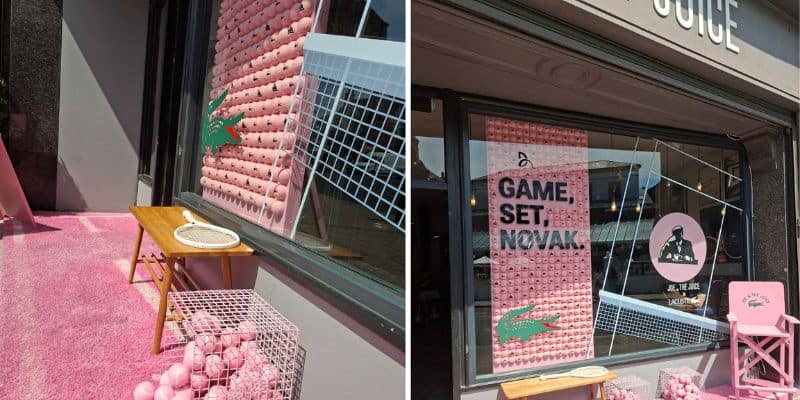
IKEA describe the colour as bold, unapologetic, playful and expressive, framing it as a way to bring energy and a sense of optimism into the home.
According to Abbey Stark, Home Furnishing Direction Leader at IKEA, “Rebel Pink is a happy rebel. It’s bold, unapologetic and full of energy. Where last year’s hue grounded us, this one lifts us. It’s playful, expressive and a little rebellious.”
IKEA also link Rebel Pink to their GREJSMOJS collection, which they describe as being inspired by their Play Report and focused on bringing play into everyday spaces.
From what I can see IKEA are not rejecting their Scandinavian roots with Rebel Pink. Instead, they are adding a more expressive counterpoint to an aesthetic that is already known for emotional restraint and ‘neutrality’.
What these 2026 Colour of the Year announcements show is just how differently colour is being framed right now. Some brands lean into clarity and restraint, others into expression and play, while others stretch colour across multiple narratives at once. The colours themselves are only part of the story. How they are described, positioned, and explained matters just as much.
Colour does not exist in isolation. It sits within its natural seasonal colour family, responds to how it is used, and is always experienced by people in real, everyday settings.
When colour language becomes too broad or tries to do everything at once, meaning can blur. When it is more precise, it becomes easier to understand how and where a colour might genuinely support everyday life.
So the more useful question is not whether a Colour of the Year speaks to you as a designer, but whether it speaks to the people you are designing for. Trends can inform the conversation, but they are not something to be followed without question.
Making colour trends work for your client
If navigating colour trends ever feels more confusing than helpful, this is exactly the space I explore in my course Everything You’ve Ever Wanted to Know About Colour Trends.
Most designers say they do not follow trends, and that makes sense. But clients do. Colour trends influence what people notice, respond to, and ask for, which means they cannot simply be dismissed. This course helps you understand how trends work, why they gain traction, and how to use them with confidence and discernment, without feeling led by them.
If you’re recognising that this is an area where greater clarity and confidence would genuinely support your work and your client conversations, there is a next step.
Want to learn more?
Understanding colour trends isn’t about following them. It’s about knowing what they represent, why people respond to them, and how they influence the conversations you’re already having with clients.
When you understand what’s happening beneath the surface, you’re no longer reacting to trends. You’re making informed decisions about how, when, and whether they belong in your work.
If understanding colour trends at a deeper level matters to the way you work, you can see the full course details here.
Download my free e-book
The 10 Myths that Limit You Using Colour Effectively explores the most common misunderstandings that hold people back when working with colour.
Wishing you a colourful day!
Karenx
Originally published January 2026. Updated February 2026.