
How is Colour Psychology Different to Other Colour Modalities?

Karen Haller
Have you ever searched online for information about colour psychology, only to be met with a flood of conflicting articles, infographics, and books? Over the years, almost anything to do with colour has been bundled under the label of colour psychology. No surprise then that one of the most common questions I’m asked is, “What exactly is colour psychology?”
There are in fact a number of different colour modalities, each with its own origins and focus. The most well-known include colour healing, colour therapy, colour symbolism, personal colour preference, colour chakras, Feng Shui and auras. I thought it would be helpful to briefly explain these so you can see how they differ, why they’re not interchangeable, and how each stands as a unique approach.
So today, let’s explore these different modalities, where they come from, and what they’re used for.
And let’s begin with what colour psychology is not…
Colour Chakras
The chakra system originated in India sometime between 1500 and 500BC and it can be found in the oldest text called the Vedas. The word chakra comes from Sanskrit meaning ‘spinning vortexes of energy’ and is rooted in Hindu spirituality.
Chakras are energy centres that are spaced out from the spine to the top of the head and each of the seven chakras has a corresponding colour that aligns with the seven colours of the rainbow being: red, orange, yellow, green, blue, indigo, and violet (or white). This modality is used a lot in yoga practice and are used as focal points for meditation within the human body.
The idea behind this modality is that when all seven chakras are balanced, energy flows freely through the body aiding us to function on an emotional, physical, and mental level.
Colour healing / Colour therapy
Colour healing or colour therapy is also known as chromotherapy or light therapy and this uses the visible spectrum of light to improve a person’s mood, along with their physical and mental health by shining the relevant colour light on the particular part of the body.
This method is also used to balance the body’s energy centres (chakras) by using the seven colours of the visible light spectrum with the aim to stimulate the body’s own healing process.
Feng Shui colour
Feng Shui is an ancient philosophy originating in China which combines Feng (wind), the air and the magnetic field of energy of the universe, with Shui (water) which represents the flow and change. It is the power of the nature.
The practice of Feng Shui arranges items in living spaces to create balance with the natural world to our benefit. The aim is to harness the energy and establish harmony between the individual and their environment to attract ‘Chi’ or positive life energy. This philosophy has become very popular in western society with several celebrity designers incorporating Feng Shui principles into their designs.
Personal Colour Association
Colour association is largely a conscious association we have to a particular colour, even down to a particular tint, tone or shade, that relates to an event or a memory.
For example, you may dislike a certain tone of green because it reminds you of your school uniform and you didn’t enjoy school. It could be you love the colour yellow because it reminds you of your VW beetle when you would go on fun holidays with your family as a child.
This is personal to you. From my experience I have found this to be the main reason why client’s loathe a colour.
Colour Symbolism / Colour in Culture
In most cultures there will be specific colours that have a meaning which has symbolic significance within that culture and is often our human way of seeking meaning within our environment. This belief can be formed over many generations, if not hundreds of years. Often the original reason may no longer be known, slipping into folklore.
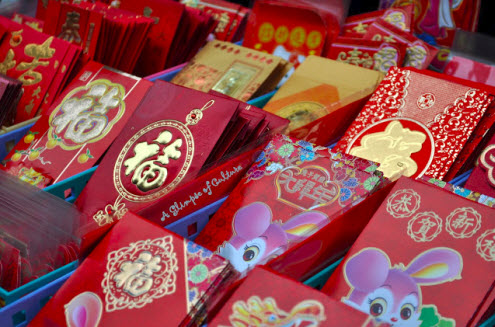
Understanding our clients’ cultural beliefs when it comes to colour decisions is important. For example, in China, white is the colour that represents death and red is the colour that symbolises good fortune, prosperity, and luck which might go some way to explain why white wine doesn’t sell well but red wine does.
A more recent cultural belief that started in western cultural is that pink is for girls and blue is for boys. There was a time when only these two colours were available and pink was seen exclusively as a girls colour leading to the belief there were gender specific colours. That’s how powerful a cultural belief can be.
Aura / Aura Photography / Aura reading
An aura is believed to be an energy field that surrounds a person. It is described as carrying information relating to their mental, emotional, physical, and spiritual state, emitting patterns of light that correspond with personality, mood, life events, or state of consciousness. The energy field is said to consist of seven layers, each associated with different aspects of health, with seven corresponding colours.
In aura photography the person places their hands on plates connected to a specialised camera system that uses biofeedback sensors and instant imaging to record electrical signals. These signals are then represented as coloured light around the person in the photograph.
A practitioner may interpret the colours and patterns seen in the photograph or perceived directly (tap into their intuition or use meditation techniques) to sense these auras and provide insight into the person’s state and well being at that moment, reflecting how a person is managing their life, emotions, and spiritual resources.
Colour Psychology
Colour psychology goes beyond the visual experience, the pretty and the decorative. It’s the study of our subconscious responses to colour and how it influences what we think, feel and do.
Established research into theories relating to colour and psychology suggest each colour has specific effects that are universal and influence us on all levels; mental, emotional and physical.
The theory behind this is that the varying wavelengths of light from colour hit our retina and are converted into electrical impulses. These pass to the hypothalamus, which is part of the brain governing our hormones and our endocrine system, meaning when we take in colour they send subconscious messages in a language that we understand instinctively, the language of emotions.
Colour psychology helps us to understand the benefits of using colour consciously.
Colour psychology doesn’t claim to heal or be a cure for illness. But what you are able to do is intentionally create a well-balanced environment that has a positive effect on our wellbeing, whether that’s in our own homes, for patients and residents in healthcare settings, for your staff, or customers in a store.
In a nutshell, colour psychology allows greater insight into human nature and human behaviour, why we do what we do and how our environments can influence our thoughts and emotions. And when we understand that, we can use colour to create positive, life-enhancing spaces, places and outcomes consciously.
Enhance your colour work
As you can see there are a lot of colour modalities, and they are all unique. The beauty is when you know the purpose and function of each, you’re able to consciously create and meet your clients’ specific needs and have clarity on the results you’re seeing.
A deeper understanding of how we subconsciously respond to colour will only serve to enhance the work you already do with colour, whether you are a designer, creative, or someone who works with one of these other modalities.
Ultimately, we all want to create spaces where people will not just live in or be productive,
but feel safe, connected and thrive.
And that is something colour psychology can absolutely support you to do.
If you would like to understand how colour can shape behaviour, influence emotions, and elevate the experience you create for your clients, then download my free e book The 10 Myths that Limit You using Colour Effectively. It will show you the real impact colour can have in your business so you can make confident decisions, support your clients more deeply, and bring more meaning into every project you create.
And if you would like to find out how you can use the principles of colour psychology in your projects and have me working alongside you, all you need to do is send me an email to karen[at]karenhaller.co.uk to discuss further.
Colourfully yours,
Karen
Originally published 30 June 2021
Last updated November 2025